What is a Deposit?
In the business world, the term deposit is quite commonly used, especially when a transaction requires an upfront payment commitment. A deposit is usually associated with security money, a down payment, or funds paid in advance before a product or service is fully delivered.
For business owners, understanding what a deposit is is crucial because this concept can help reduce the risk of transaction cancellations, maintain cash flow, and ensure buyers are more serious about their orders.
Especially in the digital payment era, deposit management needs to be handled neatly so that every transaction is easy to monitor and record. This is where payment gateways like Ayolinx can help businesses accept payments in a more practical and structured manner.
Understanding Deposits
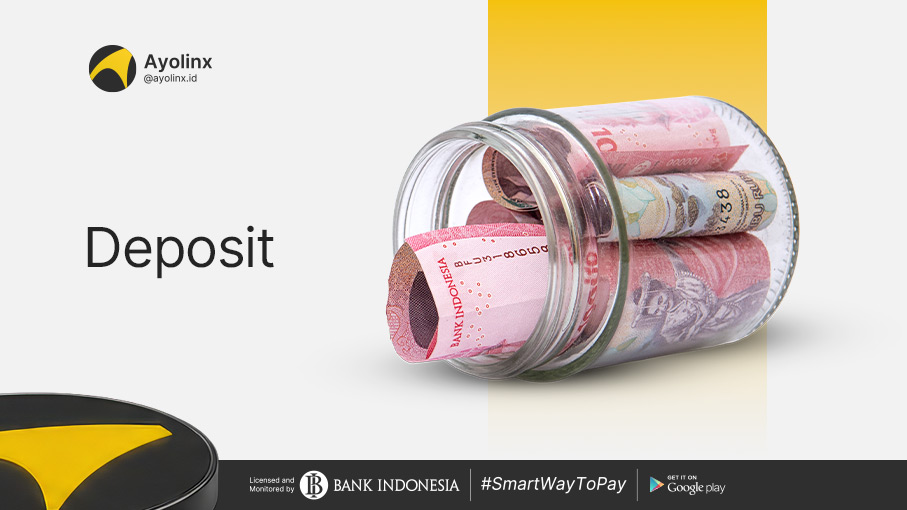
In general, a deposit is a sum of money paid or kept as a guarantee, down payment, or form of commitment in a transaction..
In a business context, deposits are typically used to ensure that customers are truly serious about purchasing a product or using a certain service. These deposit funds can be part of the total payment or returned according to agreed-upon terms.
For example, a customer wants to order products in large quantities. To avoid the risk of a one-sided cancellation, the business can request a deposit in advance before the production or shipping process is carried out.
With a deposit, the business has initial protection from the risk of loss, while the customer also shows commitment to the ongoing transaction.
Types of Deposits in Business
Deposits come in several types commonly used in business transactions. Here are some of them:
1. Refundable Deposit
A refundable deposit is a deposit that can be returned to the customer after certain conditions are met.
This type of deposit is often used in property rentals, hotels, vehicle rentals, or services requiring a guarantee. If there is no damage, violation, or additional cost, the deposit funds will be returned to the customer.
For example, a customer rents an event space and is asked to pay a deposit as a guarantee. If there is no damage to the facilities after the event, the deposit will be returned according to the agreement.
2. Non-Refundable Deposit
Unlike a refundable deposit, a non-refundable deposit is a deposit that cannot be returned if the customer cancels the transaction.
This type of deposit is typically used to protect businesses from losses due to sudden cancellations, especially if the business has already incurred upfront operational costs.
For example, a customer orders event decoration services and pays a deposit in advance. If the customer unilaterally cancels the order, the deposit remains the property of the service provider according to the applicable terms.
3. Customer Deposit
A customer deposit is a down payment or guarantee paid by the customer before goods or services are provided. This type of deposit is widely used by businesses that accept custom orders, pre-orders, or transactions in large quantities. Customer deposits help businesses ensure that customers are committed to completing the payment.
For instance, a restaurant orders a large quantity of tableware from a supplier. Because the transaction value is quite large, the supplier requests a 30% customer deposit before the order is processed.
4. Security Deposit
A security deposit is a guarantee fund provided to protect the service provider from the risk of damage, late payments, or breach of agreement.
This type of deposit is often used in asset rentals, such as buildings, vehicles, work tools, or business properties.
If damage or additional costs occur, the security deposit funds can be used to cover those costs. However, if there are no issues, the deposit will usually be returned to the customer.
5. Advance Payment
Advance payment is often considered similar to a deposit. The difference is that an advance payment usually becomes a direct part of the payment for the product or service.
For example, a customer pays 50% upfront to start a project, then the rest is paid after the work is completed.
For businesses, advance payments can help maintain cash flow because a portion of the funds has already been received before the work begins.
Uses of Deposits for Businesses
Deposits have many benefits, especially for businesses that frequently accept large orders, custom services, or transactions with time-consuming execution processes. Here are some of its uses:
1. Reducing the Risk of Unilateral Cancellation
One of the main functions of a deposit is to reduce the risk of cancellation by the customer.
With an upfront payment, customers are usually more committed to continuing the transaction. This helps businesses avoid losses caused by orders being suddenly canceled after the production or preparation process has begun.
2. Helping Maintain Business Cash Flow
Deposits can help businesses secure initial funds before the product or service is fully delivered.
These funds can be used to purchase raw materials, pay vendors, prepare operations, or meet other needs related to customer orders.
That way, businesses do not always have to bear all the costs upfront using internal cash.
Showing Customer Seriousness
Customers willing to pay a deposit usually have a more serious intention to proceed with the transaction.
This helps businesses filter out truly potential customers and reduce the risk of fake orders, especially for high-value transactions or bulk orders.
4. Assisting Operational Planning
With a deposit system, businesses can estimate the number of orders that will actually be processed.
This makes planning for stock, production, work schedules, and shipping much more organized. Businesses can also prioritize orders based on customers who have already made deposit payments.
5. Making Transactions Safer and More Structured
Deposits help create clearer transaction rules between businesses and customers.
Everything from the deposit amount, refund terms, and settlement deadlines, to the consequences of cancellation, can be agreed upon from the start. With clear rules, the risk of misunderstandings between businesses and customers can be minimized.
Examples of Deposit Usage in Business
Product pre-order businesses
- Bisnis pre-order produk
- Decoration services and event organizers
- Property or room rentals
- Vehicle or work tool rentals
- Custom product orders
- Bulk goods suppliers
- B2B services with high transaction values
For example, a furniture business receives an order for custom office desks. Because the product is made according to the customer's request, the business asks for a 40% deposit before production begins. Once the product is finished, the customer pays off the remaining balance before delivery takes place.
With a system like this, the business is more secure because it has already received an upfront payment commitment.
Deposits and Payment Gateways: What is the Connection?
In modern business, deposit payments no longer have to be done manually. Customers can pay deposits through various digital payment methods, such as virtual accounts, QRIS, e-wallets, convenience stores, and other payment methods.
A payment gateway helps businesses accept deposit payments more easily, quickly, and neatly. Every incoming transaction can be recorded automatically, so businesses don't need to manually match payments one by one.
For businesses with many transactions, this is very important. If deposit payments are still checked manually, operational processes can become slow, prone to input errors, and difficult to monitor.
Manage Deposit Payments More Practically with Ayolinx
To help businesses accept digital payments more easily, Ayolinx is here as a payment gateway solution that can support your business transaction needs.
With Ayolinx, businesses can accept payments from customers through various digital payment methods. Every transaction can also be monitored practically through a dashboard, making the payment recording process neater and easier to manage.
Ayolinx is suitable for businesses that require a more structured payment system , including for receiving deposits, down payments, settlements, or routine transactions from customers.
What is the Difference Between a Deposit and a Settlement?
Deposits and settlements serve different functions in business transactions. A deposit is an initial payment made as a form of commitment or guarantee. Meanwhile, a settlement is the payment of the remaining balance until the total transaction is fulfilled.
For example, a customer buys a product worth IDR 10,000,000 and pays a deposit of IDR 3,000,000. Thus, the remaining payment or settlement that must be paid is IDR 7,000,000.
With this system, businesses can start processing the order after receiving the deposit, and then complete the transaction after the customer makes the settlement.
Conclusion
Deposits can help businesses reduce the risk of cancellation, maintain cash flow, and ensure customer commitment. However, to keep recording and monitoring organized, businesses also need to use a practical and integrated payment system.
With Ayolinx , deposit payments can be accepted through various digital payment methods, such as QRIS and Virtual Accounts. Every transaction can also be monitored through a dashboard in real-time, so businesses no longer need to manually check payment proofs and recap transactions one by one.
Manage your deposit payments and business transactions more practically with Ayolinx.